insight
SEO vs AIO vs GEO: what is the difference?
7 June 20266 min read

The naming is messy, but the work is not. A practical guide to classic search, AI search, and generative engine visibility for SME leaders.
Every few years digital marketing gets a new acronym and everyone pretends the old rules have died.
They usually have not.
SEO, AIO, and GEO are three names for a related problem: will the right people find your business when they ask a question?
The channel has changed. The behaviour has changed. The answer format has changed. But the commercial problem is familiar. If your business is not visible when buyers research a problem, compare suppliers, check credibility, or ask an AI tool who can help, you are leaving demand on the table.
The mistake is treating SEO, AIO, and GEO as three disconnected strategies.
They are not. They are layers.
SEO: being found in search
SEO is still the foundation.
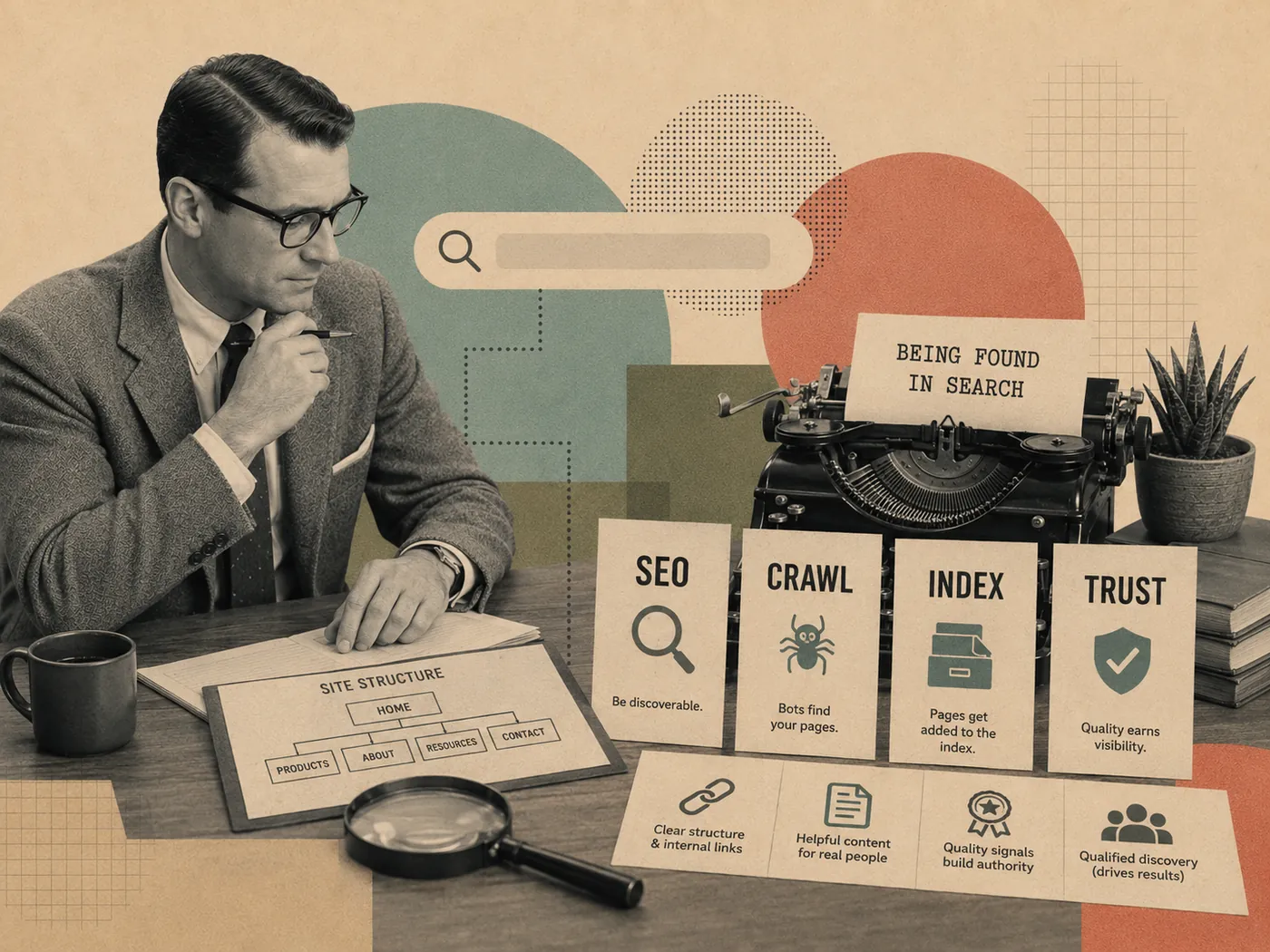
Search engine optimisation is the work of making sure your website can be crawled, understood, trusted, and shown for searches that matter. It covers technical health, site structure, content, internal links, page experience, metadata, schema, authority, and whether the page actually answers the thing the searcher meant.
For SMEs, the useful version of SEO is not a 90-page keyword report. It is much simpler:
- Can Google crawl and index the important pages?
- Does each service, market, product, and problem have a clear page?
- Do those pages answer real buying questions?
- Are the title, heading, copy, internal links, and calls to action aligned?
- Is the site fast enough, readable enough, and credible enough?
- Can you tell which pages are generating enquiries?
SEO is not just traffic. Traffic is easy to misunderstand.
The point is qualified discovery. You want the right prospects landing on the right page with enough confidence to take the next step.
AIO: being useful inside AI-assisted search
AIO is usually used to mean AI optimisation. Sometimes people mean "AI Overviews optimisation". Sometimes they mean "answer engine optimisation". The acronym is loose, which is part of the problem.
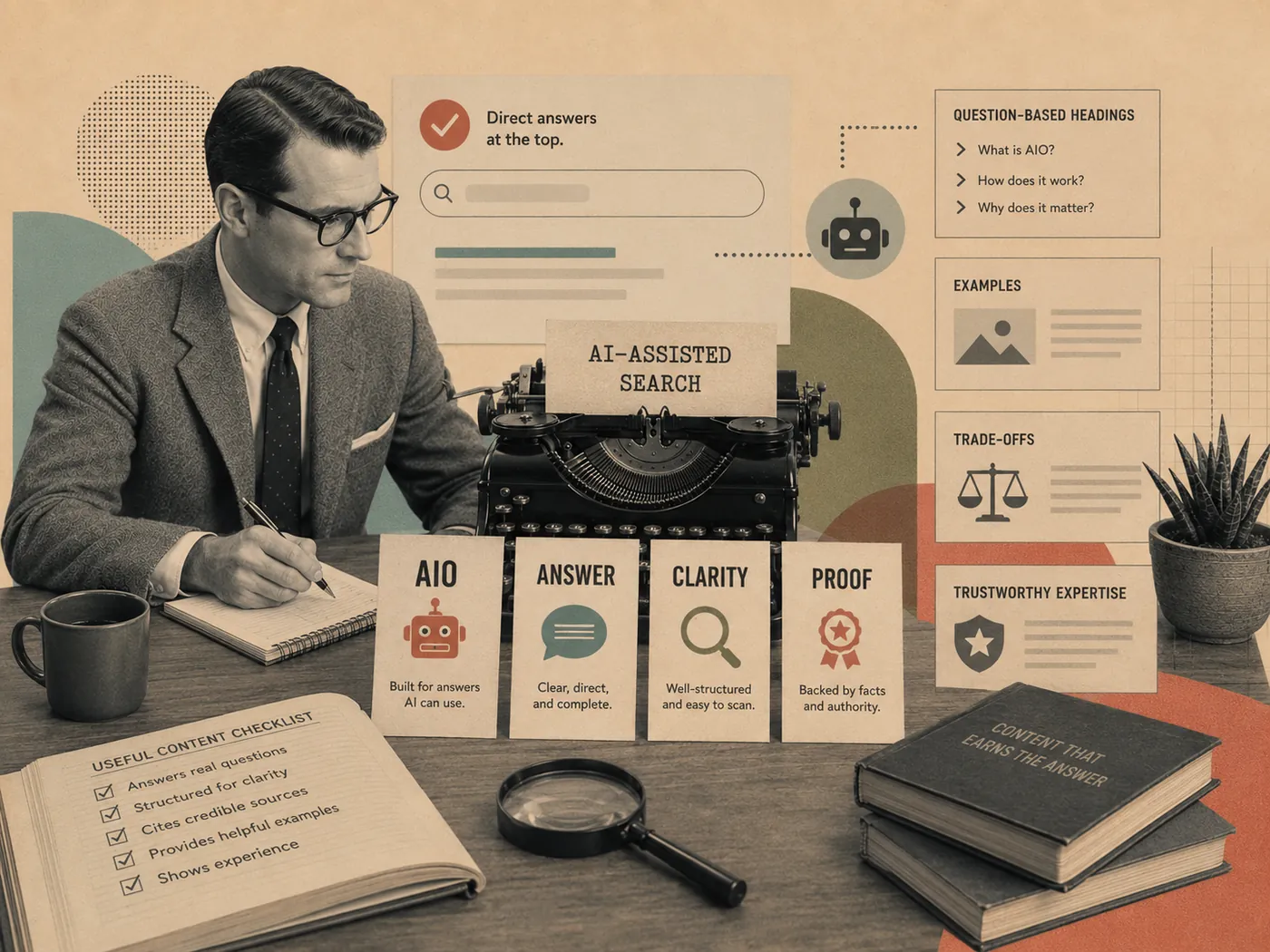
The practical meaning is this: is your content useful enough, clear enough, and structured enough to be surfaced inside AI-assisted search experiences?
Google's own guidance is refreshingly boring here. It says the core SEO fundamentals still apply to AI features in Search. There is no magic schema, no special file, and no secret markup that guarantees visibility in AI Overviews or AI Mode.
That matters.
It means AIO is not a replacement for SEO. It is SEO with more emphasis on clarity, originality, and answer quality.
AI-assisted search is better at handling messy questions:
- "What is the difference between an MSP and a fractional CIO?"
- "How should a manufacturer start using AI without risking customer data?"
- "What should a COO check before replacing an ERP?"
- "Which SEO consultant understands B2B industrial SMEs?"
Those are not just keywords. They are buying problems.
To do well here, content needs to be more than keyword-targeted. It needs to be genuinely answerable. A page should make it easy for a human and a machine to understand:
- what problem you solve;
- who you solve it for;
- what you believe;
- what steps you recommend;
- what proof you have;
- what trade-offs matter;
- when you are not the right fit.
The more vague the page, the less useful it is to an AI system trying to assemble a reliable answer.
GEO: being cited, retrieved, and trusted by generative systems
GEO stands for generative engine optimisation.
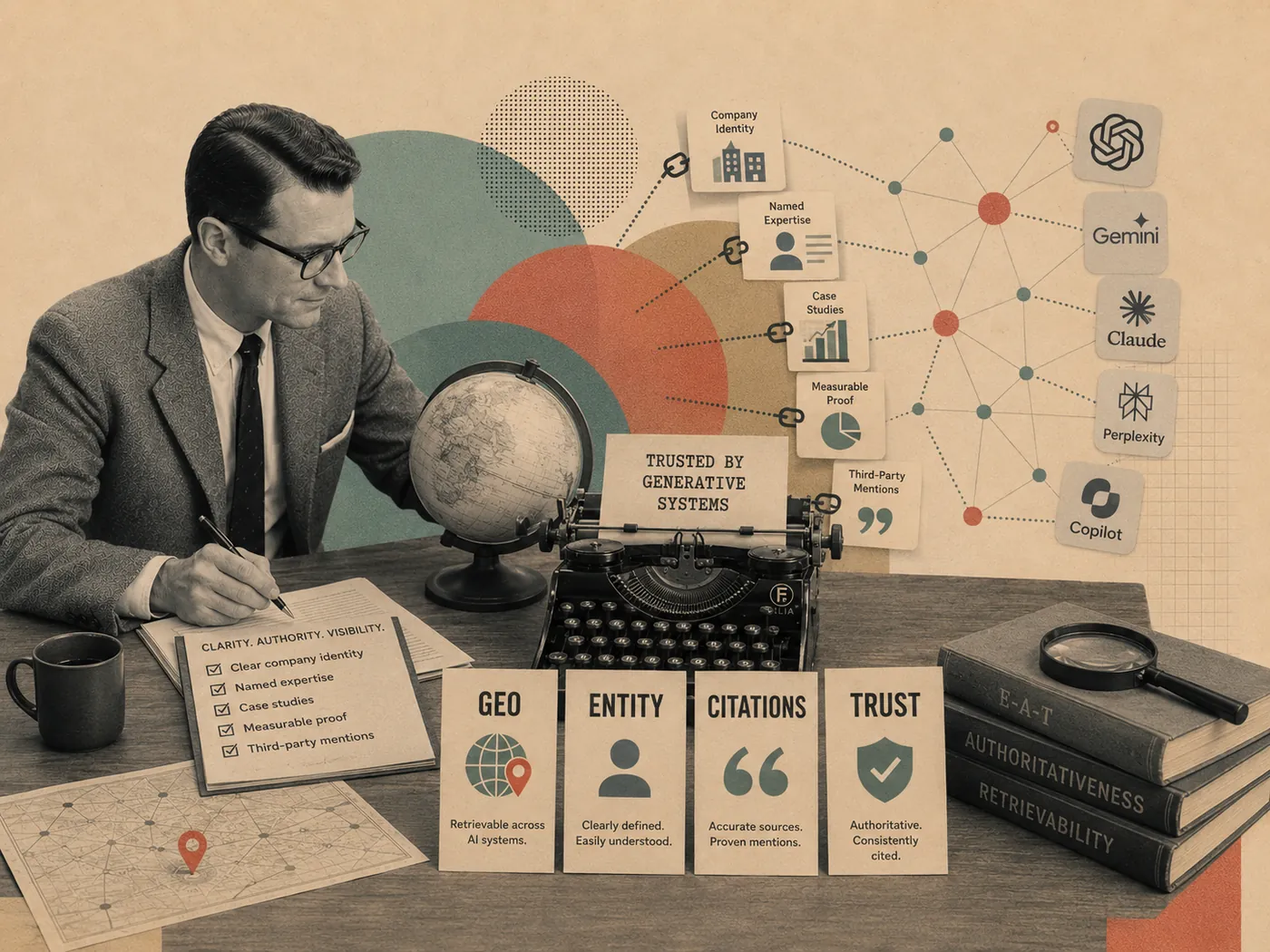
It is the newest label and the easiest one to overcomplicate. At its most useful, GEO asks:
When someone asks a generative AI tool about your category, are you part of the material it can confidently use?
This extends beyond Google.
People now ask ChatGPT, Claude, Gemini, Perplexity, Copilot, and vertical tools to explain markets, compare suppliers, draft shortlists, summarise options, and sanity-check buying decisions. Those tools may use search, retrieval, indexes, partner data, browser access, user-provided documents, or model memory depending on the product and context.
You cannot control all of that.
But you can make your business easier to understand, reference, and trust.
GEO is not about tricking LLMs into mentioning you. That is the fast route to nonsense.
It is about building a footprint that makes sense:
- clear service pages;
- specific case studies;
- named expertise;
- consistent company information;
- useful articles that answer real questions;
- third-party mentions where possible;
- clean metadata and schema;
- pages that are accessible as text;
- strong internal links;
- content that says something non-generic.
If your website says the same thing as every other consultant, agency, MSP, or software vendor, there is very little for a generative system to prefer.
The simple difference
Here is the clean version:
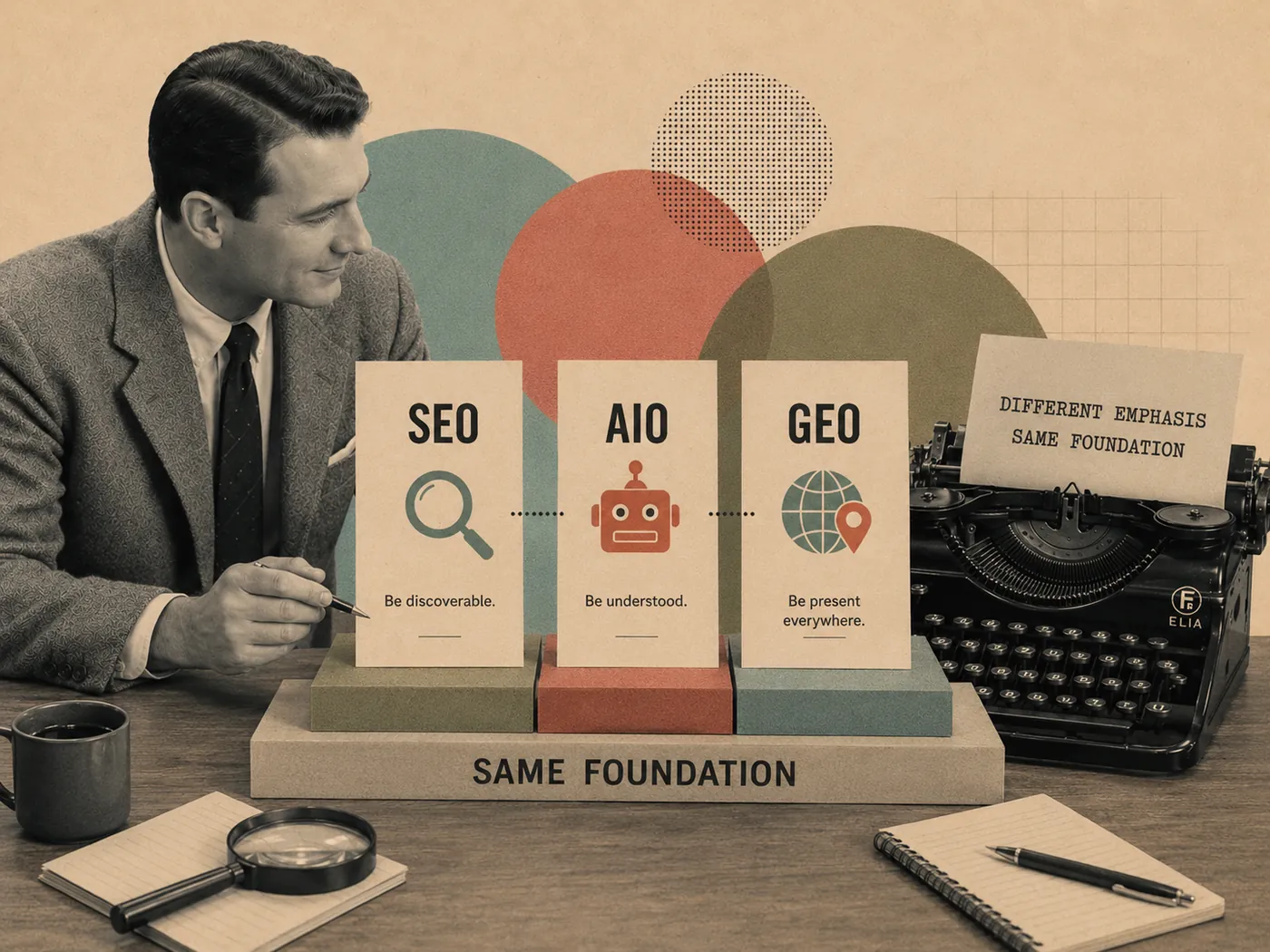
SEO helps your pages rank and earn clicks in classic search.
AIO helps your content perform in AI-assisted search features by being clear, useful, structured, and answerable.
GEO helps your brand become discoverable and citable across generative systems by making your expertise, entity, and evidence easier to retrieve and trust.
Different emphasis. Same foundation.
The best steps for SEO
Start with the boring technical work. Boring is underrated.
- Make sure every important page is crawlable and indexable.
- Fix broken links, accidental noindex tags, duplicate titles, and redirect mess.
- Build a clean page structure around services, sectors, problems, and proof.
- Write pages that answer the buyer's real question, not just the keyword.
- Use internal links deliberately so related pages support each other.
- Add schema where it matches visible content.
- Measure enquiries, not just impressions.
For a UK SME, the first SEO win is often not clever content. It is cleaning up a site that has accumulated years of half-decisions.
The best steps for AIO
For AIO, make your best pages easier to use as answers.
- Put the direct answer near the top.
- Use clear headings that match real questions.
- Add examples, trade-offs, and decision criteria.
- Explain who the advice applies to and who it does not apply to.
- Include first-hand experience where you have it.
- Keep claims specific and defensible.
- Avoid mass-produced AI content that adds nothing.
AI-assisted search does not remove the need for judgement. It raises the bar for being genuinely useful.
The best steps for GEO
For GEO, think like a retrieval system and a cautious buyer at the same time.
- Make your entity clear: company name, people, services, geography, and contact details.
- Keep the same positioning across your site, profiles, bios, and listings.
- Publish specific proof: case studies, named testimonials, measurable outcomes, and constraints.
- Build pages around buying questions, not just service labels.
- Earn mentions outside your own website where possible.
- Keep important content in clean HTML text, not buried in images or PDFs.
- Refresh stale pages when your offer, pricing, or market changes.
This is not a one-week optimisation sprint. It is reputation infrastructure.
What I would do first
If an SME asked me where to start, I would not start with a new acronym.
I would start with an audit of the questions customers ask before they buy.

Then I would map those questions to pages:
- Do we already answer this?
- Is the answer any good?
- Is it findable?
- Is it specific to us?
- Does it show judgement?
- Does it lead somewhere useful?
From there, the work becomes obvious.
Technical SEO gets the site into shape. AIO makes the answers better. GEO makes the business easier to understand and trust across the wider AI search surface.
The businesses that win will not be the ones chasing every acronym. They will be the ones with clear positioning, useful content, strong proof, and a website that machines and humans can understand.
That is less glamorous than a new marketing label.
It is also much more likely to work.
Get Actionable AI in your inbox.
One practical AI play per issue. Sent occasionally, never filler.
Ready to use AI seriously?
A 30-minute call. No deck, no follow-up nurture sequence. I'll tell you whether I can help.