insight
How to get buy-in from your team for AI
7 June 20266 min read

AI adoption is not won with a keynote. It is won by reducing fear, choosing useful workflows, keeping humans in control, and making the first implementation genuinely helpful.
You do not get buy-in for AI by telling people the future is coming.
Most teams have heard that already.
They have seen the demos. They have read the headlines. They have watched leaders get excited about tools that may or may not make their jobs easier. Some are curious. Some are sceptical. Some are quietly using AI already. Some are worried that "implementation" is just a polite word for headcount reduction.
If you ignore that, adoption will be shallow.
People may attend the training. They may nod in the workshop. They may even try the tool once. Then they will go back to the old workflow because the old workflow is known, social, safe, and already fits the pressure of the day.
AI buy-in is not a communications problem.
It is an operating problem.
AI buy-in is not a communications problem. It is an operating problem.
Start by being honest about the fear
The first mistake is pretending people are only excited.
They are not.
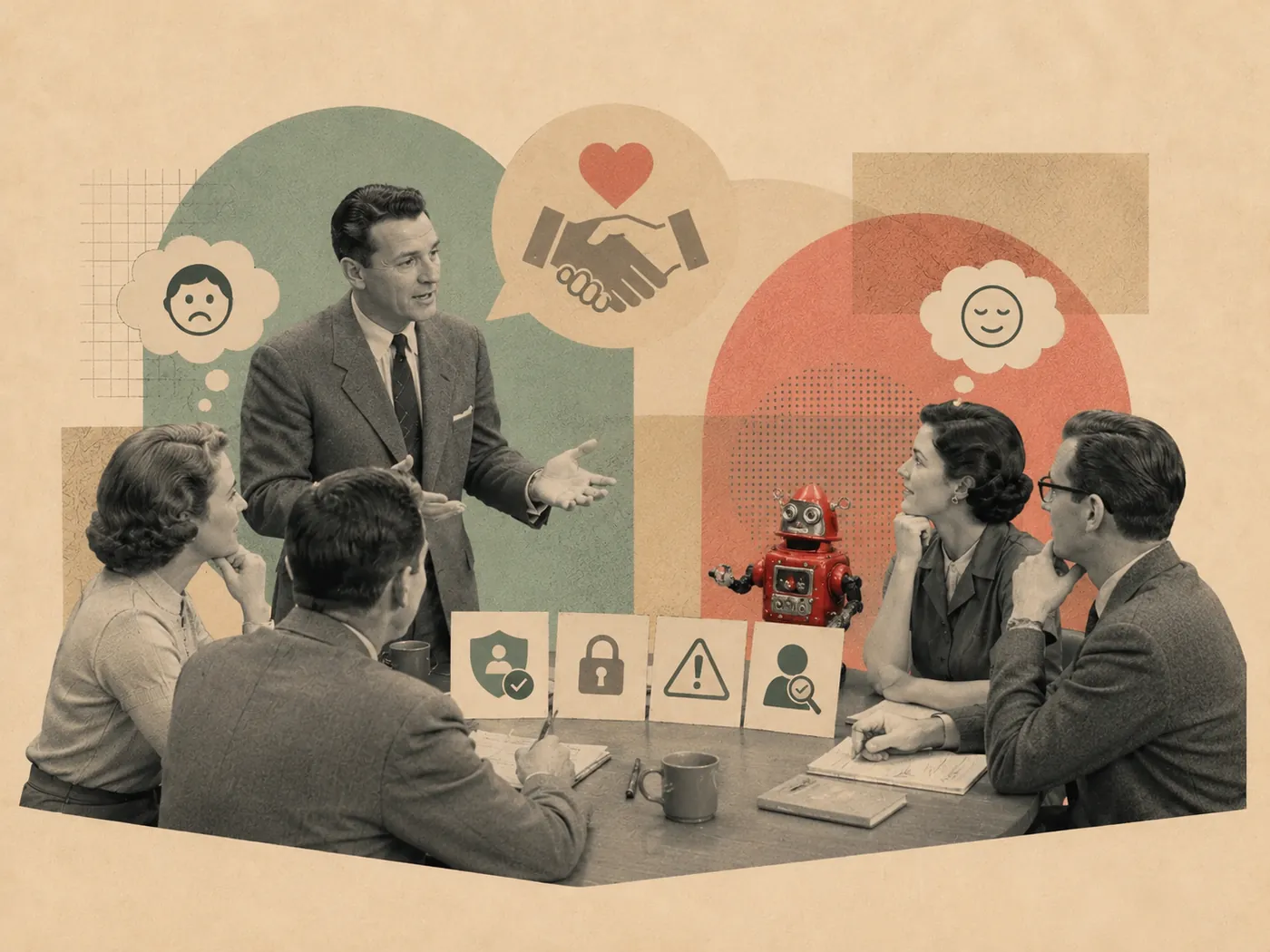
Some will be worried about job security. Some will be worried about looking stupid. Some will worry that AI output will be wrong and they will be blamed. Some will worry about customer data. Some will see it as another management fad. Some will have tried a model, received a weak answer, and concluded the whole thing is nonsense.
These are not irrational reactions.
They are normal reactions to a technology that is powerful, uneven, and badly explained.
The leadership job is not to dismiss the concern. It is to create a safe frame:
- what AI is for;
- what AI is not for;
- what decisions remain human;
- what data must not be entered;
- where review is required;
- how mistakes will be handled;
- how the work will be measured.
If the team thinks AI is being smuggled in as surveillance or replacement, they will resist it even if the tool is useful.
Do not start with the tool
The second mistake is starting with software.
"We have bought Copilot."
"We are rolling out ChatGPT."
"We have an AI platform."
Fine. But what work is changing?
People do not adopt a tool because it exists. They adopt it because it removes a pain they actually feel.
Start with the workflow:
- What is slow?
- What is repetitive?
- What creates rework?
- What requires searching through old documents?
- What causes customer delays?
- What do people avoid because it is tedious?
- Where does work get stuck waiting for someone to turn messy information into a decision?
That is where buy-in begins.
If AI helps with a job the team already hates, adoption is much easier.
Find the useful sceptics
Every business has three groups.
There are enthusiasts who want to use AI for everything.
There are sceptics who assume most of it is overblown.
And there is a middle group waiting to see whether this is actually useful.
The enthusiasts are helpful for energy, but they are not always the best design partners. They may be too forgiving. They may enjoy the tool even when it creates no business value.
The useful sceptics are gold.
They know the workflow. They know the exceptions. They know where a glossy demo will fail. They know what customers ask, where the data is wrong, which field no one trusts, and what would make the tool unacceptable.
Bring them in early.
Not to block the work. To make it real.
If you can build something a sceptical operator finds useful, you are much closer to adoption.
Keep humans visibly in control
Most early AI implementations should not be fully autonomous.
They should draft, suggest, summarise, classify, retrieve, compare, and prepare. Humans should approve, send, decide, promise, price, and escalate.
That distinction matters for buy-in.
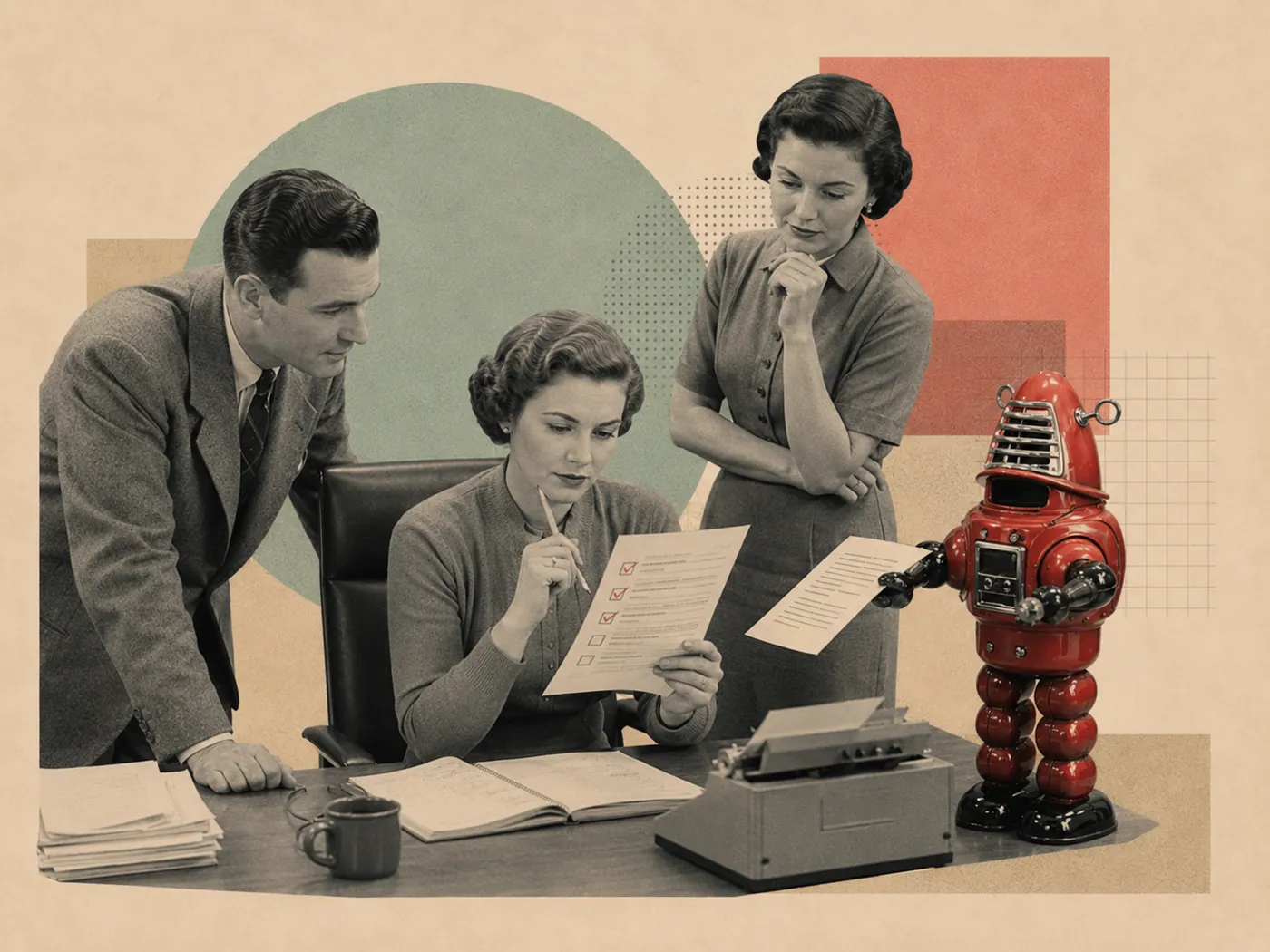
When people see AI as an assistant, they are more willing to try it. When they see it as a hidden manager, they resist it.
Make the boundaries explicit:
- AI can draft a customer reply.
- A person sends it.
- AI can suggest a category.
- A person can change it.
- AI can summarise a policy.
- HR or legal owns the interpretation.
- AI can flag a pricing anomaly.
- Finance or sales owns the decision.
The more sensitive the workflow, the more visible the human control should be.
Make the first implementation boringly useful
Do not start with the most cinematic use case.
Start with the one that makes people say, "Oh, that actually saves me time."
Good first implementations often look boring:
- summarising long customer threads;
- drafting replies from approved knowledge;
- turning meeting notes into actions;
- classifying inbound enquiries;
- building cleaner sales research packs;
- finding the right SOP;
- checking product records for missing fields;
- producing management commentary from structured data.
Boring is good.
Boring means the workflow already exists. The pain is already understood. The output can be reviewed. The value can be measured.
The fastest way to lose buy-in is to launch an ambitious AI system that fails in front of the people it was supposed to help.
Train people on judgement, not prompts
Prompt training is useful, but it is not enough.
The real skill is judgement:
- When is the answer good enough?
- When does it need checking?
- What should never go into the model?
- What does a hallucination look like?
- How do you ask for sources?
- How do you brief the model with context?
- How do you turn a weak output into a better one?
- When should you stop using AI and ask an expert?
Teams do not need to become prompt engineers.
They need to become better operators of AI-assisted work.
That means practical examples from their own workflows, not generic training slides.
Show the before and after
Buy-in improves when people can see the difference.
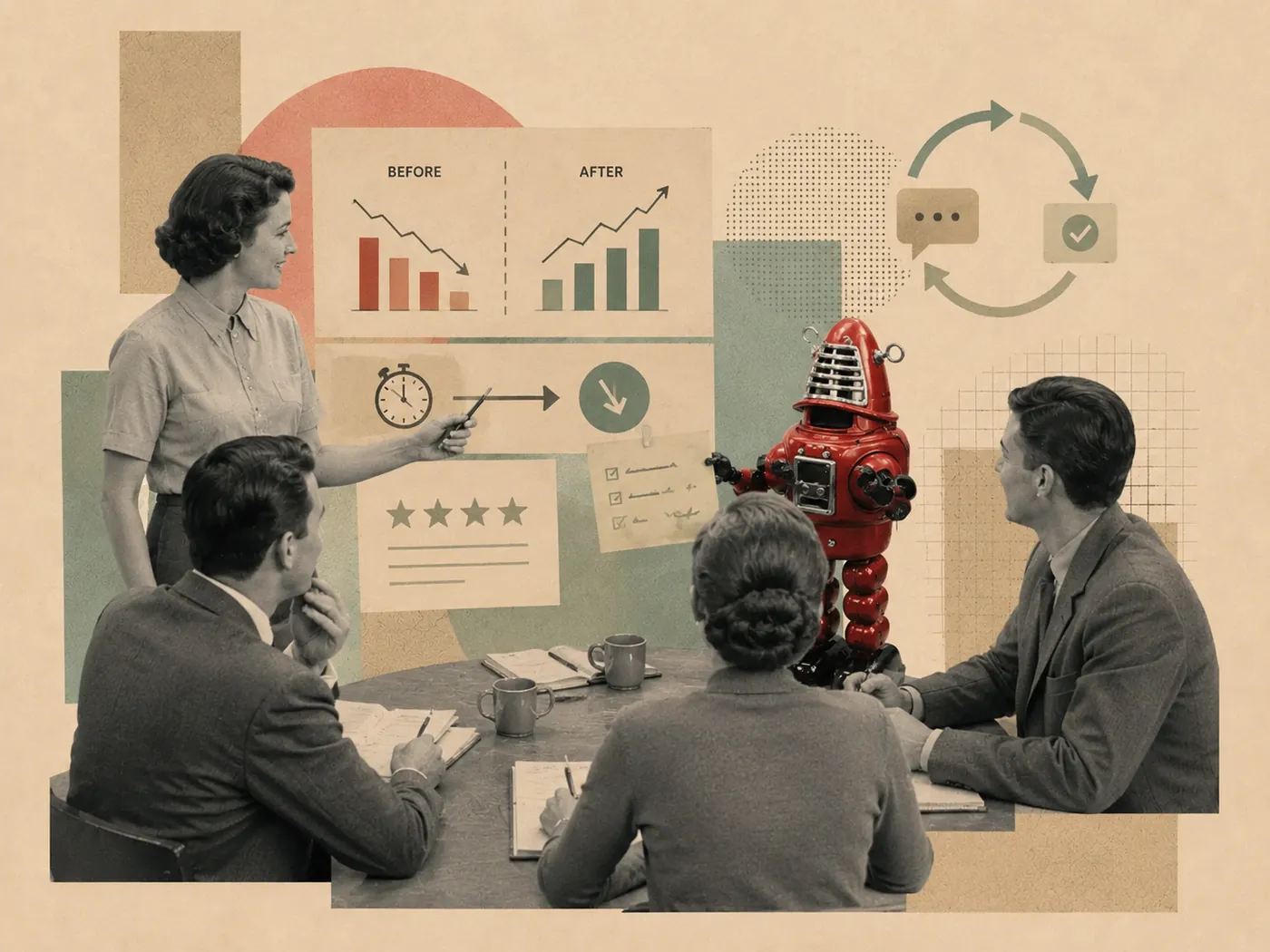
Pick a workflow and measure it before you change it:
- how long it takes;
- how often it gets stuck;
- how much rework it creates;
- how many items are waiting;
- how many errors happen;
- how many escalations are required.
Then measure the same thing after the AI support is added.
Not in vague productivity language. In operational terms.
"Ticket summaries now take 30 seconds instead of 6 minutes."
"Lead research packs are ready before the sales meeting."
"The team can find approved policy answers without asking the same three people."
"Pricing exceptions are reviewed before they become margin leakage."
That is how trust builds.
Do not punish people for surfacing problems
Early AI systems will fail in small ways.
The retrieval will miss something. The model will phrase something badly. A classification will be wrong. A summary will skip a detail. A user will find an edge case the project team did not consider.
This is not embarrassment. It is feedback.
If people are punished for pointing out problems, they will stop pointing them out. The system will quietly rot.
Create a feedback loop:
- wrong answer;
- missing source;
- unsafe suggestion;
- confusing interface;
- useful but incomplete;
- should be escalated;
- should never be automated.
The team needs to see that their feedback improves the system.
That turns resistance into ownership.
Make managers accountable
AI adoption cannot sit only with IT.
The department manager has to own the workflow. IT can help with security, tools, access, integration, and governance. But the business owner must define what good looks like.
Who reviews the output?
Who decides the escalation rules?
Who updates the source material?
Who trains new starters?
Who checks whether the system is still working three months later?
If no one owns those answers, AI becomes another orphaned project.
The message that works
The best internal message is not:
"AI will transform everything."
It is:
"We are going to use AI to remove specific pain from the way we work. We will keep humans responsible for important decisions. We will start small, measure the result, and improve the system with the team using it."
That is believable.
It respects the people doing the work.
It also gives leadership a better way to judge success. Not by how many licences were bought. Not by how many people attended training. By whether a real workflow got better.
Buy-in follows usefulness.
Start there.
Get Actionable AI in your inbox.
One practical AI play per issue. Sent occasionally, never filler.
Ready to use AI seriously?
A 30-minute call. No deck, no follow-up nurture sequence. I'll tell you whether I can help.